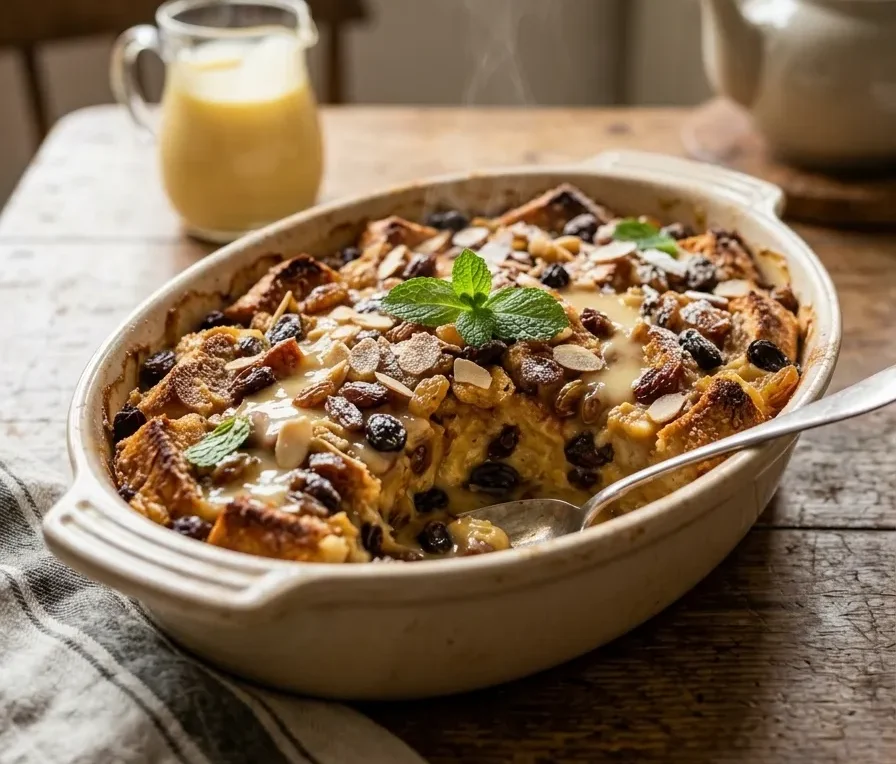
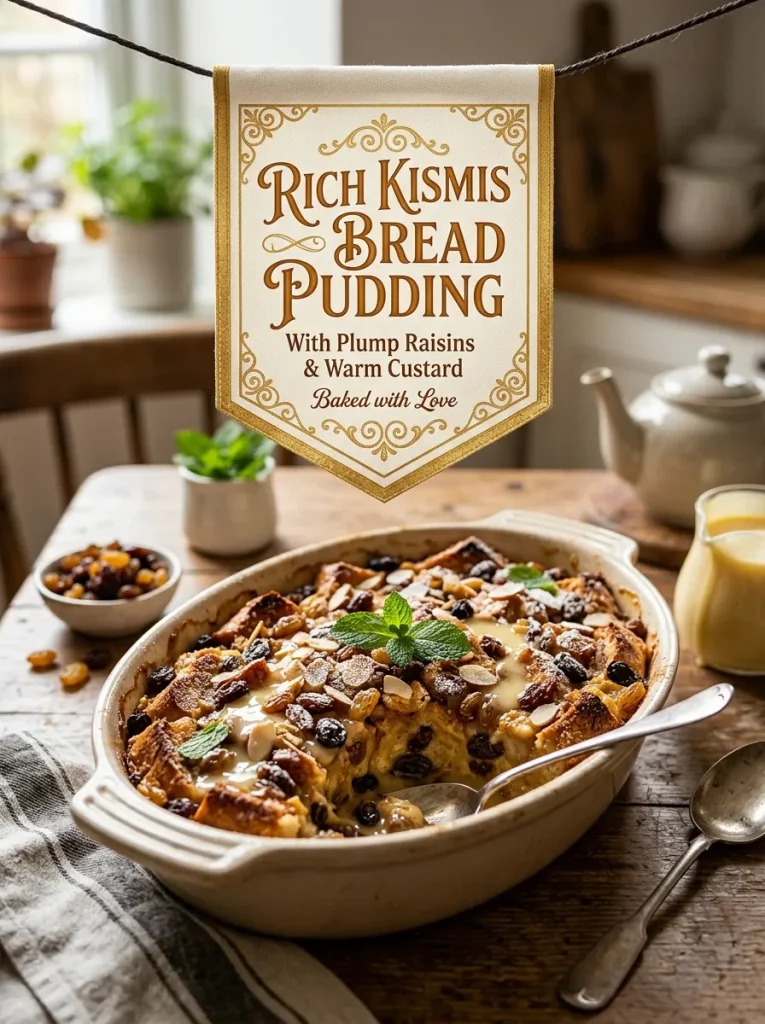
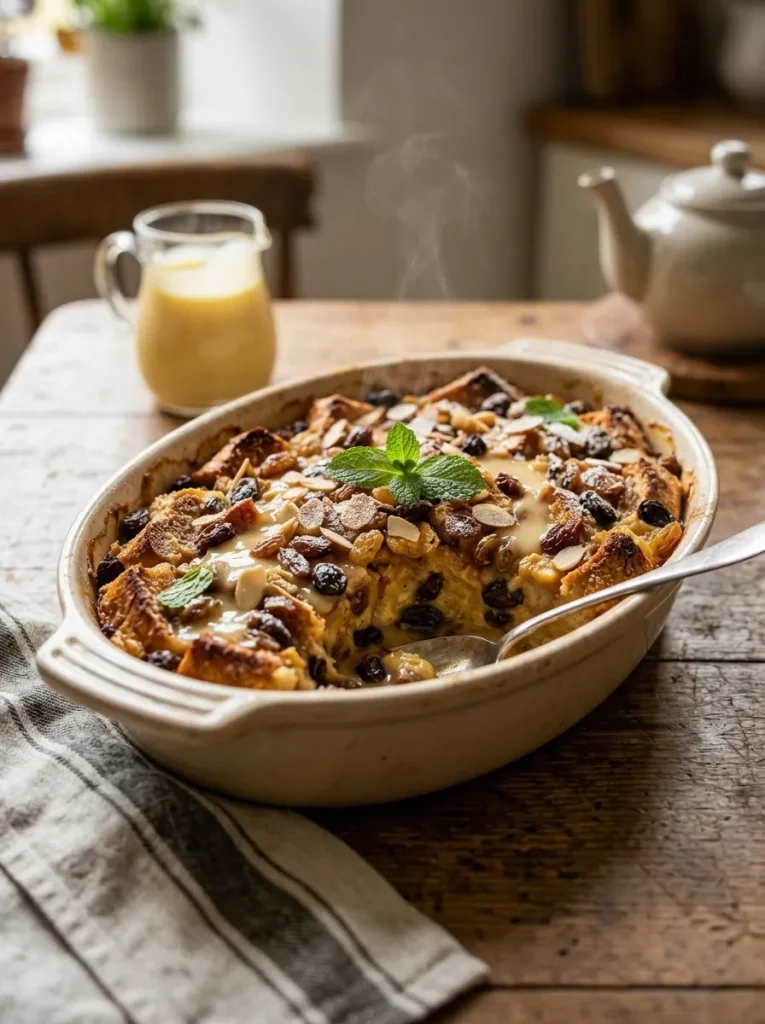
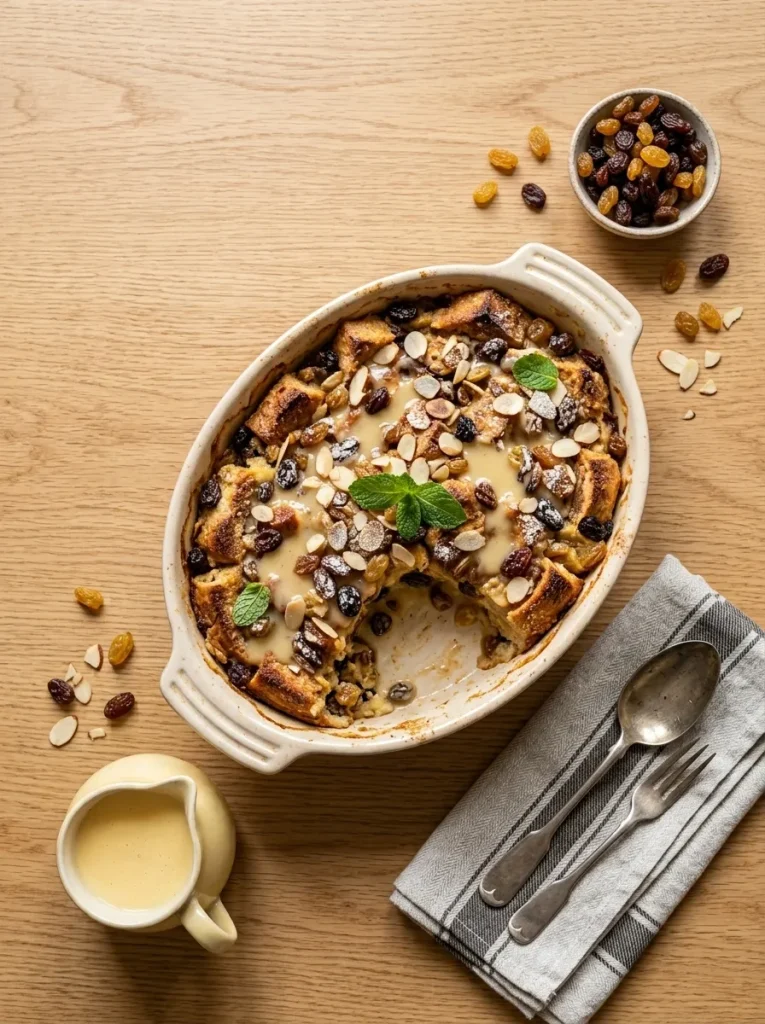
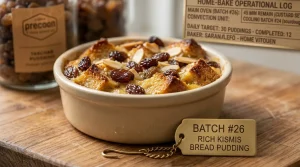
Bread pudding has a reputation for being soggy or heavy, and a bad one deserves it. A good one is something else entirely. This Rich Kismis Bread Pudding has a crisp, caramelized top, a silky custard center, and plump kismis (raisins) that turn jammy as they bake. It’s the kind of dessert that makes a kitchen smell like warm cinnamon and vanilla.
It’s also one of the most forgiving desserts you can make. You need stale bread, a simple custard, and about 15 minutes of hands-on time. The oven does the rest, and the result tastes like you worked much harder than you did.
Make it for a weekend brunch, a cozy dinner party, or any time a loaf of bread is going stale on your counter. It’s especially good on a rainy evening, served warm, with something creamy poured over the top.
Why You’ll Love This Recipe
- Silky, never soggy: A proper soak and a gentle water bath give you a set custard with a tender crumb, not wet bread.
- Rich but balanced: Brown sugar, cinnamon, and a hint of nutmeg keep it warm and deep without being cloying.
- Uses up stale bread: A great reason to rescue the end of a loaf.
- Make-ahead friendly: Assemble it the night before and bake it fresh in the morning.
- Jammy kismis in every bite: Soaking the raisins first keeps them plump instead of leathery.
Ingredient Notes
Bread: Day-old or lightly toasted brioche, challah, or a soft white loaf works best. Enriched breads give the richest result. Avoid very airy sandwich bread, which can collapse into mush, and very hard crusty sourdough, which stays chewy.
Kismis (raisins): Golden kismis gives a bright, honeyed sweetness, and dark raisins give a deeper, caramel-like flavor. Indian and Pakistani grocers usually stock excellent bulk kismis, and a mix of both is lovely.
Whole milk and heavy cream: Together they make a rich but not heavy custard. If you only have milk, use all milk and add one extra egg yolk for richness.
Eggs: Large eggs set the custard. Bring them to room temperature so they blend smoothly.
Dark brown sugar: It adds a molasses depth that white sugar can’t. Light brown sugar works if that’s what you have.
Spices: Ground cinnamon and freshly grated nutmeg. Freshly grated nutmeg is much more fragrant than the pre-ground kind, so use it if you can.
Vanilla extract: Use pure vanilla, not imitation, since it’s one of the main flavors here.
Step-by-Step Instructions
Dry Out the Bread
Cut 1 pound (450 g) of bread into 1-inch cubes, about 8 cups. If the bread isn’t already stale, spread the cubes on a baking sheet and bake at 300°F (150°C) for 10 to 15 minutes until dry to the touch but not browned. Dry bread absorbs custard like a sponge. Fresh bread turns to paste.
Plump the Kismis
Cover 3/4 cup (110 g) kismis with hot water and let them sit for 10 minutes, then drain and pat dry. This keeps them juicy in the oven instead of drawing moisture out of the custard. For extra flavor, soak them in warm milk or a splash of rum, then drain.
Prepare the Dish and Oven
Heat the oven to 350°F (175°C). Butter a 9×13-inch baking dish thoroughly, including the corners. Scatter the bread cubes in the dish and toss in the kismis.
Whisk the Custard
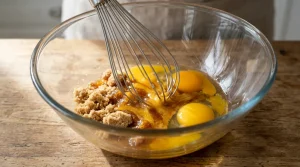
In a large bowl, whisk 4 large eggs with 2/3 cup (130 g) packed dark brown sugar until smooth. Whisk in 2 cups (475 ml) whole milk, 1 cup (240 ml) heavy cream, 1 tablespoon vanilla extract, 1 teaspoon cinnamon, 1/4 teaspoon nutmeg, and 1/2 teaspoon salt. The mixture should look smooth and uniformly pale golden, with no streaks of egg white. Streaks mean scrambled bits in the finished pudding, so whisk until it’s fully combined.
Soak the Bread
Pour the custard evenly over the bread and press the cubes down gently with a spatula so they’re submerged. Let it stand for at least 20 minutes, or cover and refrigerate for up to overnight. The bread should look saturated, with no dry pockets and only a little liquid pooling at the bottom. Skipping the soak leads to a dry top and a wet bottom, which is the most common bread pudding mistake.
Add the Topping
Dot the top with 2 tablespoons of cold butter, cut into small pieces, and sprinkle with 2 tablespoons of granulated or turbinado sugar. The butter and sugar caramelize into a crisp, crackly crust.
Bake in a Water Bath
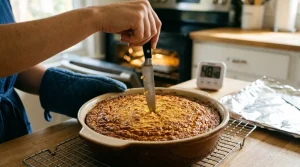
Place the baking dish inside a larger roasting pan and pour hot water into the roasting pan until it comes halfway up the sides of the baking dish. Bake for 45 to 55 minutes. The water bath insulates the custard, so it cooks gently and stays silky instead of turning rubbery. The pudding is done when the top is deep golden brown, the edges are puffed, and the center has just a slight wobble. A knife inserted in the middle should come out mostly clean, with perhaps a little moist custard clinging to it.
Rest Before Serving
Let the pudding cool for 15 to 20 minutes. It continues to set as it rests, and it slices and serves much more cleanly than it does straight from the oven.
Pro Tips
- Don’t skip the soak time. Twenty minutes is the minimum, and an overnight rest in the fridge gives you the creamiest texture.
- Use the water bath. It’s the difference between a silky custard and a dry, curdled one. If you’re short on time, cover the dish loosely with foil for the first 30 minutes instead.
- Watch the wobble. Pull the pudding when the center still jiggles slightly. Carryover heat finishes the job, and overbaking makes it dense and eggy.
- Use a mix of crusts and crumbs. Leaving the crust on the bread gives the top a pleasant chew and keeps the cubes from dissolving.
For a perfect crust, brush the top with a little melted butter just before baking and sprinkle with coarse sugar.
Storage & Reheating
Refrigerator: Cover and store leftovers for up to 4 days.
Freezer: Wrap individual portions tightly and freeze for up to 2 months. Thaw overnight in the fridge.
Reheating: Warm individual portions in the microwave for 30 to 45 seconds, or cover the dish with foil and heat in a 325°F (165°C) oven for 15 to 20 minutes. For a crisper top, uncover for the last 5 minutes.
Make ahead: Assemble the unbaked pudding, cover it, and refrigerate overnight. Take it out 20 minutes before baking and add 5 to 10 minutes to the bake time if it’s very cold.
Variations & Substitutions
- Boozy kismis: Soak the raisins in rum, brandy, or bourbon instead of water.
- Chocolate: Fold in 1/2 cup dark chocolate chips with the bread.
- Nutty: Add 1/2 cup toasted chopped pecans or walnuts.
- Cardamom and saffron: Replace the nutmeg with 1/2 teaspoon ground cardamom and a pinch of saffron steeped in warm milk.
- Orange zest: Add the zest of one orange to the custard for a bright note.
- Dairy-free: Use full-fat oat milk or canned coconut milk and a plant-based butter.
- Smaller batch: Halve the recipe and bake in an 8×8-inch dish for about 35 to 40 minutes.
Frequently Asked Questions
Why is my bread pudding soggy?
The bread was too fresh, the soak was too short, or the pudding was underbaked. Use dried bread, let it soak fully, and bake until the center is just set.
Why did my bread pudding turn out dry?
It most likely had too much bread for the amount of custard, or it was overbaked. Make sure the bread is fully submerged and pull it while the center still has a slight wobble.
Can I make it without a water bath?
Yes. Bake it at 325°F (165°C) for a little longer and cover loosely with foil for the first half of baking. The texture will be slightly less silky.
Can I use fresh bread?
Dry it in the oven first. Fresh bread is too soft and will turn to mush in the custard.
How do I know when it’s done?
The top should be deeply golden, the edges puffed, and a knife in the center should come out mostly clean.
Serving Suggestions
Serve warm, spooned into bowls, with a generous pour of vanilla custard, crème anglaise, or salted caramel sauce. A scoop of vanilla ice cream melting on the top is also hard to beat. For a lighter finish, try lightly whipped cream, and for a chai-time treat, pair it with a cup of masala chai. Leftovers make an excellent breakfast with a hot cup of coffee.
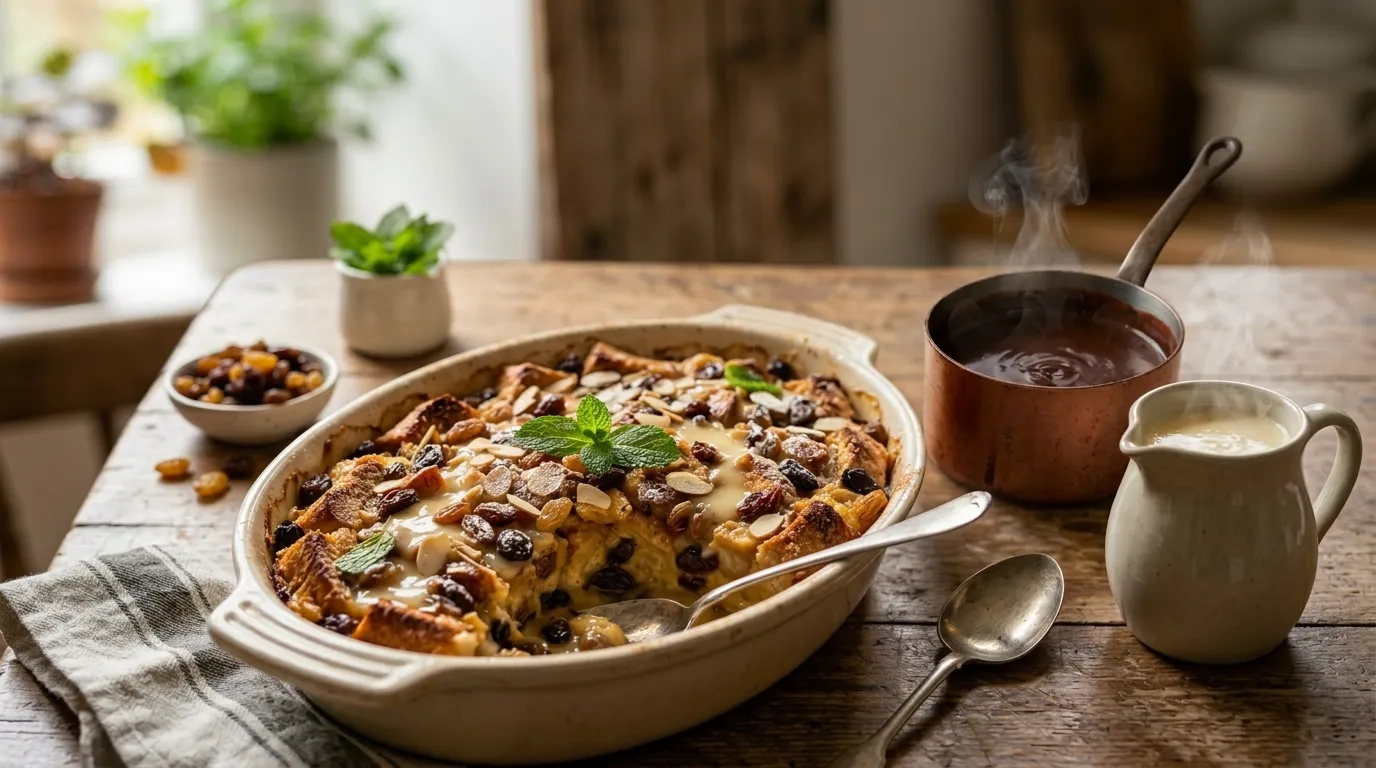
Rich Kismis Bread Pudding
Ingredients
Equipment
Method
- Prepare the Bread

- If your bread is fresh, spread the cubes on a baking sheet and dry them in a 300°F (150°C) oven for 10 to 15 minutes, until they feel dry but are not browned. Day-old bread holds its shape better and soaks up more custard.
- Brush a 9 x 9-inch (23 x 23 cm) baking dish with some of the melted butter. Add the bread cubes and drained kismis to the dish and toss gently to combine.
- Make the Custard and Soak
- In a large bowl, whisk the eggs, egg yolk, and brown sugar until smooth. Whisk in the milk, cream, vanilla, cinnamon, nutmeg, and salt.
- Pour the custard evenly over the bread. Press the cubes down gently with a spatula so they are submerged. Let the pudding soak for 30 minutes, pressing down once or twice, until the bread has absorbed most of the liquid.
- Bake
- Preheat the oven to 350°F (175°C). Drizzle the remaining melted butter over the top and sprinkle with the demerara sugar.
- Bake for 45 to 50 minutes, until the top is golden brown and the center is set. A knife inserted in the middle should come out clean or with just a few moist crumbs. If the top browns too quickly, cover loosely with foil for the last 15 minutes.
- Cool on a wire rack for 15 minutes before serving. The custard continues to set as it rests.
- Make the Sauce
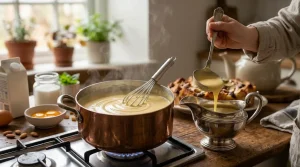
- While the pudding bakes, combine the cream, butter, brown sugar, and salt in a small saucepan over medium heat. Stir until the butter melts and the sugar dissolves, then simmer gently for 3 to 4 minutes, until slightly thickened. Remove from the heat and stir in the vanilla.
- Spoon the pudding into bowls and serve warm with the sauce poured over the top.

Video
Notes
Extra custardy: For a softer center, bake the dish in a water bath. Place it in a larger pan and pour hot water halfway up the sides.
Soaking the kismis: Soaking keeps them plump and stops them from drying out during baking. For extra flavor, soak them in warm orange juice or rum instead of water.
Make ahead: Assemble the pudding up to 12 hours ahead, cover, and refrigerate. Bake straight from the fridge, adding 5 to 10 minutes.
Storage: Refrigerate leftovers, covered, for up to 4 days. Reheat individual portions in the microwave for 30 to 45 seconds or in a 300°F (150°C) oven until warm. Store the sauce separately and rewarm gently.
Dairy-free: Use full-fat coconut milk and plant-based butter, though the flavor and texture will differ slightly. Nutrition (per serving) Calories 470 kcal Carbohydrates 56 g Protein 8 g Fat 25 g Saturated fat 14 g Cholesterol 155 mg Sodium 260 mg Potassium 250 mg Fiber 2 g Sugar 36 g