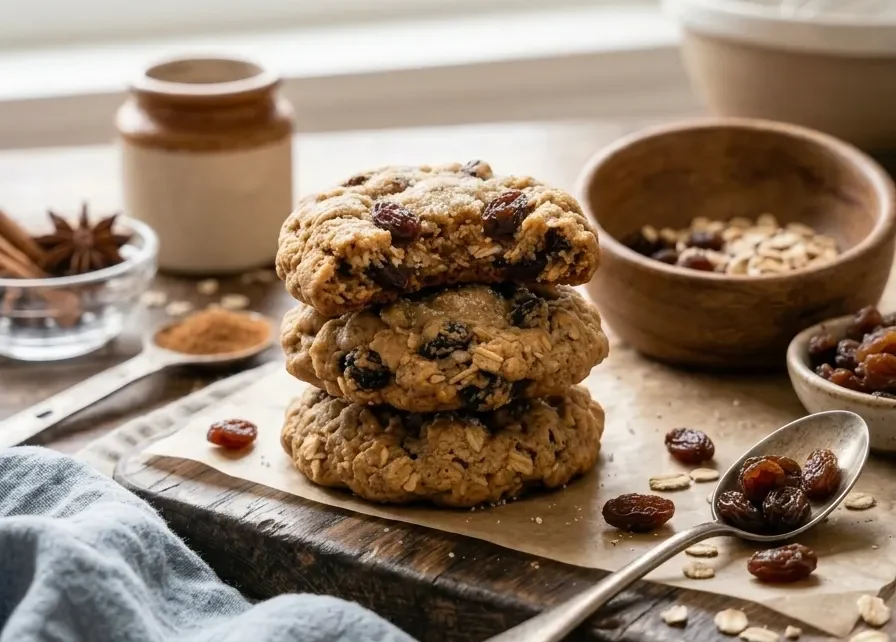
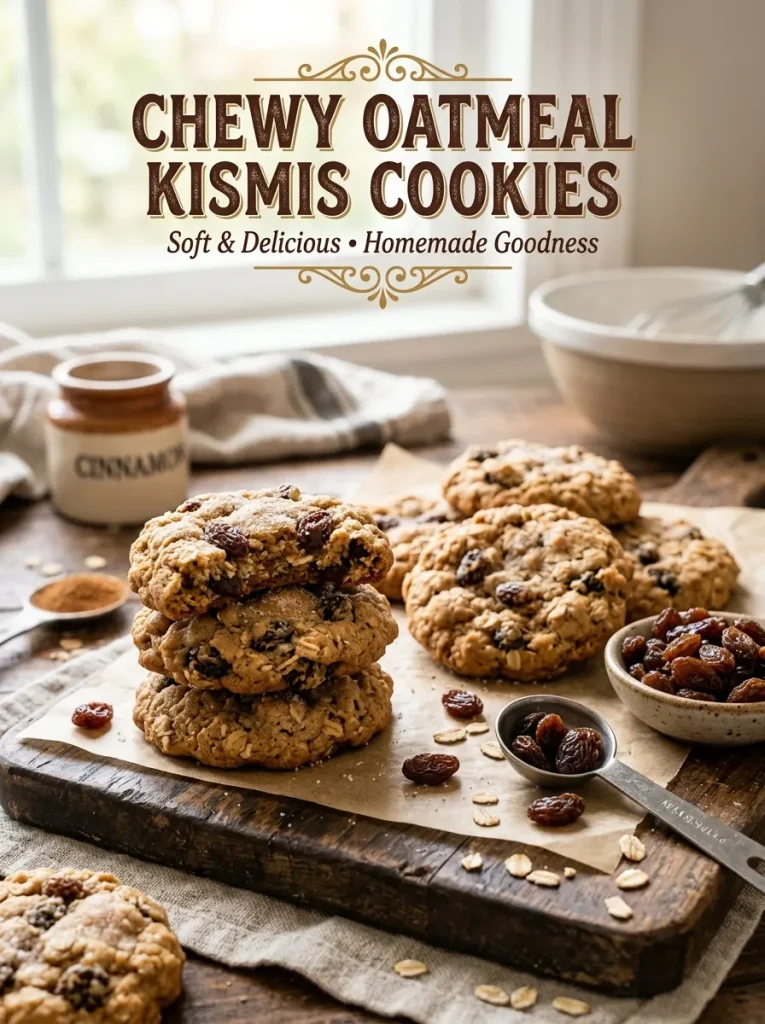
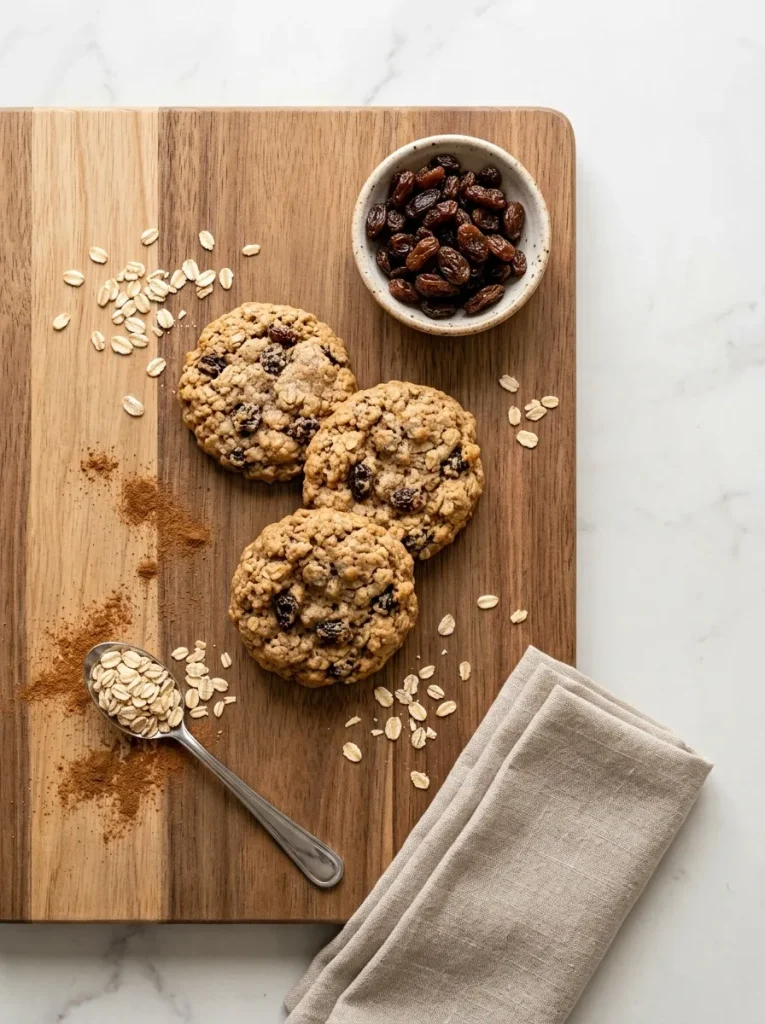
If you’ve ever bitten into an oatmeal cookie expecting chewy and gotten dry and crumbly, this recipe is for you. These Chewy Oatmeal Kismis Cookies have crisp, golden edges, soft centers, and plump, juicy kismis (raisins) in every bite. The dough comes together in one bowl, and the flavor is warm with cinnamon and brown sugar.
Kismis is the Hindi and Urdu word for raisins, and it’s what many of us grew up calling them. The name matters here because the variety you choose changes the cookie. Golden kismis gives a tangy, honeyed sweetness, and dark raisins give a deeper, jammy one. Either works.
Make these for a weekend bake, a lunchbox treat, or a chai-time snack. The dough can be made ahead and baked fresh whenever you want a warm cookie, which is hard to beat on a slow afternoon.
Why You’ll Love This Recipe
- Truly chewy: Dark brown sugar, an extra egg yolk, and a slightly underbaked finish keep the centers soft for days.
- One bowl, no mixer required: A wooden spoon or hand mixer works fine.
- Make-ahead friendly: The dough chills for up to 3 days or freezes for 3 months.
- Plump kismis: A quick soak keeps the raisins juicy instead of leathery.
- Pantry staples only: Nothing here needs a special trip to the store.
Ingredient Notes
Rolled oats (old-fashioned): These give the best chew and texture. Quick oats work in a pinch but produce a softer, more uniform cookie. Skip steel-cut oats, which won’t soften enough.
Dark brown sugar: The extra molasses adds moisture and chew. Light brown sugar works, but the cookies will be slightly less rich and a touch less soft.
Butter: Use unsalted and properly softened, meaning you can press a finger in easily but it isn’t greasy or melty. If you only have salted butter, cut the added salt to 1/4 teaspoon.
Egg plus an extra yolk: The yolk adds fat and richness, which is a big part of the chewy texture.
Kismis (raisins): You’ll find them in any grocery store, and Indian and Pakistani grocers usually carry great-quality ones in bulk. Choose soft, plump ones rather than hard, shriveled ones. The soaking step below rescues slightly dry raisins.
Cinnamon: Fresh ground cinnamon makes a noticeable difference. If yours has been in the cupboard for years, now is the time to replace it.
Step-by-Step Instructions
Plump the Kismis
Place 1 1/2 cups (220 g) kismis in a bowl and cover with hot water for 10 minutes. Drain well and pat completely dry on a paper towel. Soaked raisins stay juicy in the oven instead of pulling moisture out of your dough, but wet raisins will make the dough slick, so dry them thoroughly.
Cream the Butter and Sugars
In a large bowl, beat 1 cup (227 g) softened unsalted butter with 1 cup (200 g) packed dark brown sugar and 1/2 cup (100 g) granulated sugar for about 2 minutes. You want it pale, creamy, and slightly fluffy. This step creates tiny air pockets that give the cookies lift, so don’t rush it. If you skip it, you’ll get dense, greasy cookies.
Add the Eggs and Vanilla
Beat in 1 whole large egg, 1 egg yolk, and 2 teaspoons vanilla extract until smooth and glossy. The mixture should look cohesive, not curdled. If it looks split, your eggs were too cold, and a minute of extra mixing usually brings it back.
Add the Dry Ingredients
Whisk together 1 1/2 cups (190 g) all-purpose flour, 1 teaspoon baking soda, 1 teaspoon ground cinnamon, and 1/2 teaspoon salt in a separate bowl. Add to the wet mixture and stir just until a few streaks of flour remain. Overmixing develops gluten, which makes cookies tough instead of tender.
Fold in the Oats and Kismis
Stir in 3 cups (270 g) old-fashioned rolled oats and the dried kismis until evenly distributed. The dough will be thick and a bit sticky. That’s correct, so resist adding more flour.
Chill the Dough
Cover and refrigerate for at least 30 minutes, or up to 3 days. Chilling firms the butter so the cookies spread more slowly, and it lets the oats absorb moisture, which improves both chew and flavor. This is the single biggest factor in avoiding flat cookies.
Scoop and Bake
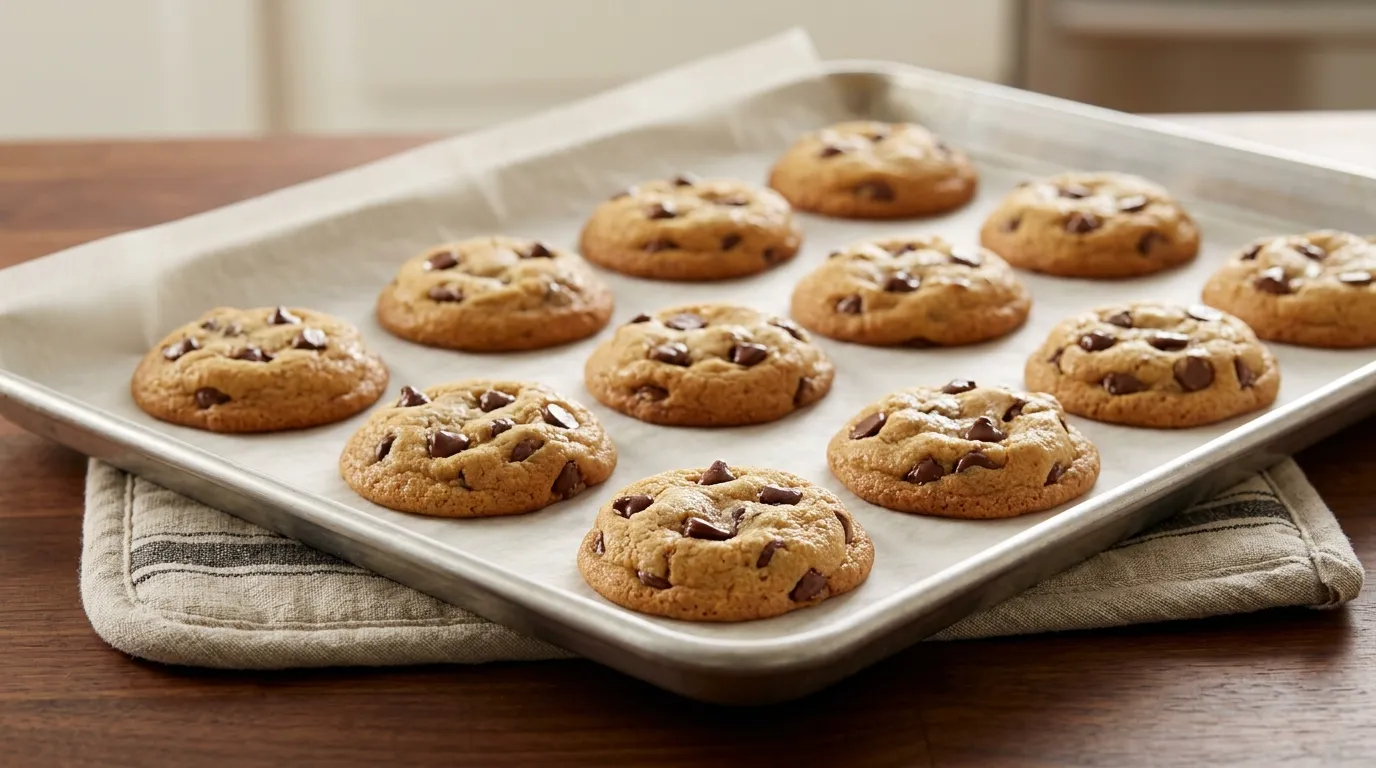
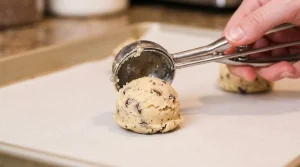
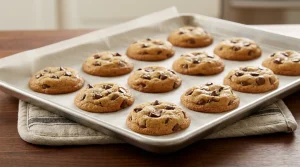
Heat the oven to 350°F (175°C) and line baking sheets with parchment. Scoop dough into rounded balls, about 2 tablespoons each, and place them 2 inches apart. Bake for 10 to 12 minutes. Pull them out when the edges are golden and set but the centers still look slightly soft and underdone. They’ll finish cooking on the hot pan, and this is what keeps them chewy.
Cool Properly
Let the cookies rest on the baking sheet for 5 minutes, then transfer them to a wire rack. Moving them too early makes them break, and leaving them on the pan too long continues to bake them into crispy cookies.
Pro Tips
- Weigh your flour if you can. Scooping with a cup can add up to 25% extra flour, which is the usual cause of dry, cakey cookies. If you use cups, spoon the flour into the cup and level it off.
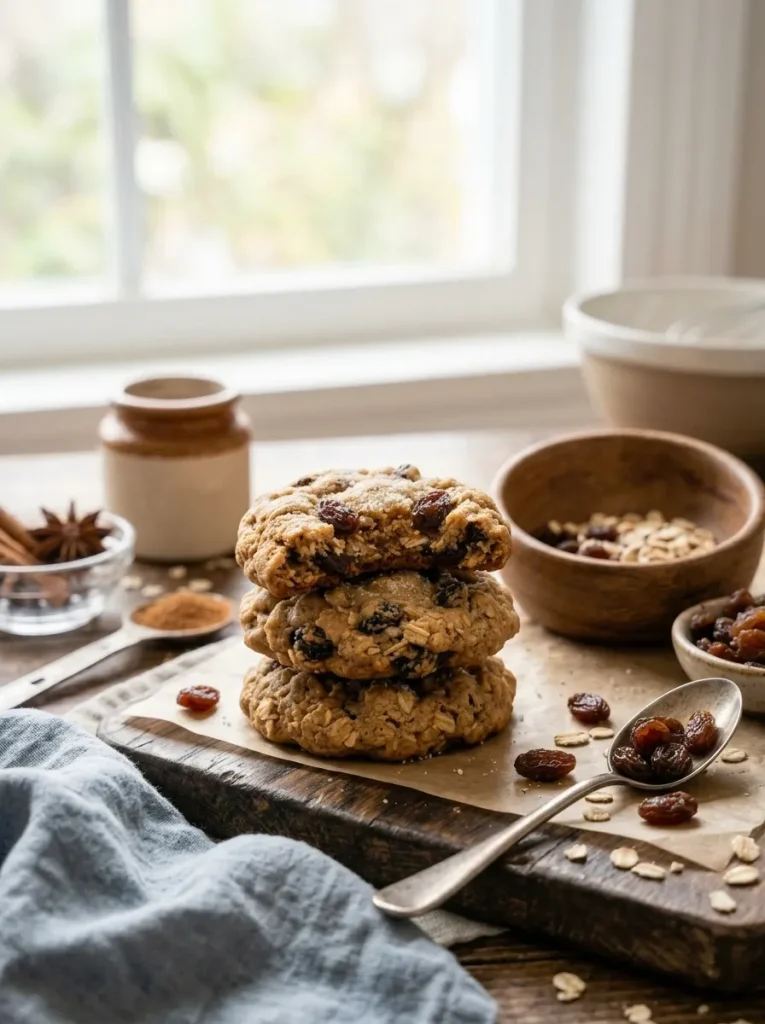
- Underbake on purpose. The cookies should look a little soft in the middle when you pull them out. Overbaking is the number one reason oatmeal cookies turn hard.
- Bang the pan. Right after removing the tray from the oven, tap it firmly on the counter once or twice. This deflates the puffed centers and creates those dense, chewy rippled edges.
- Use cool baking sheets. Placing dough on a hot pan causes immediate spreading, so rotate between two trays or run the pan under cold water and dry it between batches.
For the chewiest cookies, pull them from the oven when the centers still look a little underdone. They finish setting on the hot pan.
Storage & Reheating
Room temperature: Store cooled cookies in an airtight container for up to 5 days. Add a small piece of bread to the container to help them stay soft.
Freezing baked cookies: Freeze in a single layer until firm, then transfer to a freezer bag for up to 3 months. Thaw at room temperature.
Freezing dough: Scoop dough balls, freeze on a tray until solid, then bag them. Bake straight from frozen at 350°F (175°C), adding 1 to 2 minutes to the baking time.
Reheating: Microwave a cookie for 8 to 10 seconds for a just-baked feel, or warm it in a 300°F (150°C) oven for 3 to 5 minutes.
Variations & Substitutions
- Nutty crunch: Fold in 1/2 cup chopped walnuts or pecans.
- Chocolate twist: Replace half the kismis with dark chocolate chips.
- Cardamom spice: Swap the cinnamon for 1/2 teaspoon ground cardamom and 1/2 teaspoon cinnamon for a subtle chai-like flavor.
- Other dried fruit: Dried cranberries, chopped dates, or chopped apricots work in place of kismis.
- Gluten-free: Use a 1:1 gluten-free flour blend and certified gluten-free oats.
- Dairy-free: Use a firm plant-based butter stick. Avoid tub-style spreads, which add too much water.
Frequently Asked Questions
Why did my cookies spread too much?
The usual causes are butter that was too soft or melted, dough that wasn’t chilled, or a hot baking sheet. Chill the dough longer and make sure the butter is only just softened.
Why are my cookies hard instead of chewy?
They were most likely overbaked or had too much flour. Take them out while the centers still look soft, and measure flour carefully.
Can I skip chilling the dough?
You can, but the cookies will spread thinner and be less chewy. If you’re short on time, even 30 minutes helps noticeably.
Can I use quick oats instead of rolled oats?
Yes, though the texture will be softer and less hearty. Use the same amount by volume.
Do I really need to soak the kismis?
It’s optional, but it makes a difference. If your raisins are already soft and plump, you can skip the soak.
Serving Suggestions
These cookies are at their best slightly warm, with a tall glass of cold milk or a cup of masala chai. They also pair well with coffee, or with a scoop of vanilla ice cream sandwiched between two cookies for an easy dessert. Wrap a few in parchment for a lunchbox treat or a homemade gift.
Chewy Oatmeal Kismis Cookies
Ingredients
Equipment
Method
- In a large bowl, beat the softened butter, brown sugar, and granulated sugar with an electric mixer for 2 to 3 minutes, until light and creamy. Beat in the egg, egg yolk, and vanilla until smooth.

- Add the flour, baking soda, cinnamon, and salt, and mix on low speed until just combined. Stir in the oats and kismis with a spatula. The dough will be thick and slightly sticky.
- Cover the bowl and chill the dough for 30 minutes. This helps the cookies hold their shape and bake up thick and chewy instead of spreading thin.
- Preheat the oven to 350°F (175°C). Line two baking sheets with parchment paper.
- Scoop the dough into rounded balls, about 2 tablespoons each, and place them 2 inches (5 cm) apart on the baking sheets. Gently press the tops down slightly.
- Bake one sheet at a time for 10 to 12 minutes, until the edges are golden brown and the centers still look slightly soft. They will firm up as they cool.
- Cool the cookies on the baking sheet for 5 minutes, then transfer to a wire rack to cool completely.
Video
Notes
Oats: Use old-fashioned rolled oats for the best chew. Instant oats make a softer, more cakey cookie.
Soaking the kismis: Soaking keeps them plump and stops them from drawing moisture out of the dough.
Add-ins: Swap half the kismis for chopped walnuts, dried cranberries, or chocolate chips.
Dairy-free: Use vegan butter sticks in place of the butter.
Storage: Store in an airtight container at room temperature for up to 5 days. Freeze baked cookies for up to 3 months, or freeze scooped dough balls and bake from frozen, adding 1 to 2 minutes. Nutrition (per cookie) Calories 155 kcal Carbohydrates 24 g Protein 2 g Fat 6 g Saturated fat 3 g Cholesterol 28 mg Sodium 95 mg Potassium 110 mg Fiber 1 g Sugar 13 g